About
AstroBiota develops a process for working with highly wild biological systems — organisms that resist standard domestication, standardization, and control.
We believe many failures in biological production arise before genetics or process engineering ever begin. The problem is not what organism is used, but how that organism is brought into use.
Our approach is based on a simple observation: living systems carry memory. What an organism becomes depends on what it has experienced. By shaping that history deliberately, we aim to make wild systems more stable, more compliant, and more usable — without changing DNA.
The methods we are developing are organism-agnostic and function-agnostic. In principle, they apply wherever biology shows history-dependent behavior. Our current focus is filamentous fungi, where phenotypic variance remains a major industrial bottleneck.
Writing
Public writing related to AstroBiota’s work.
Donate
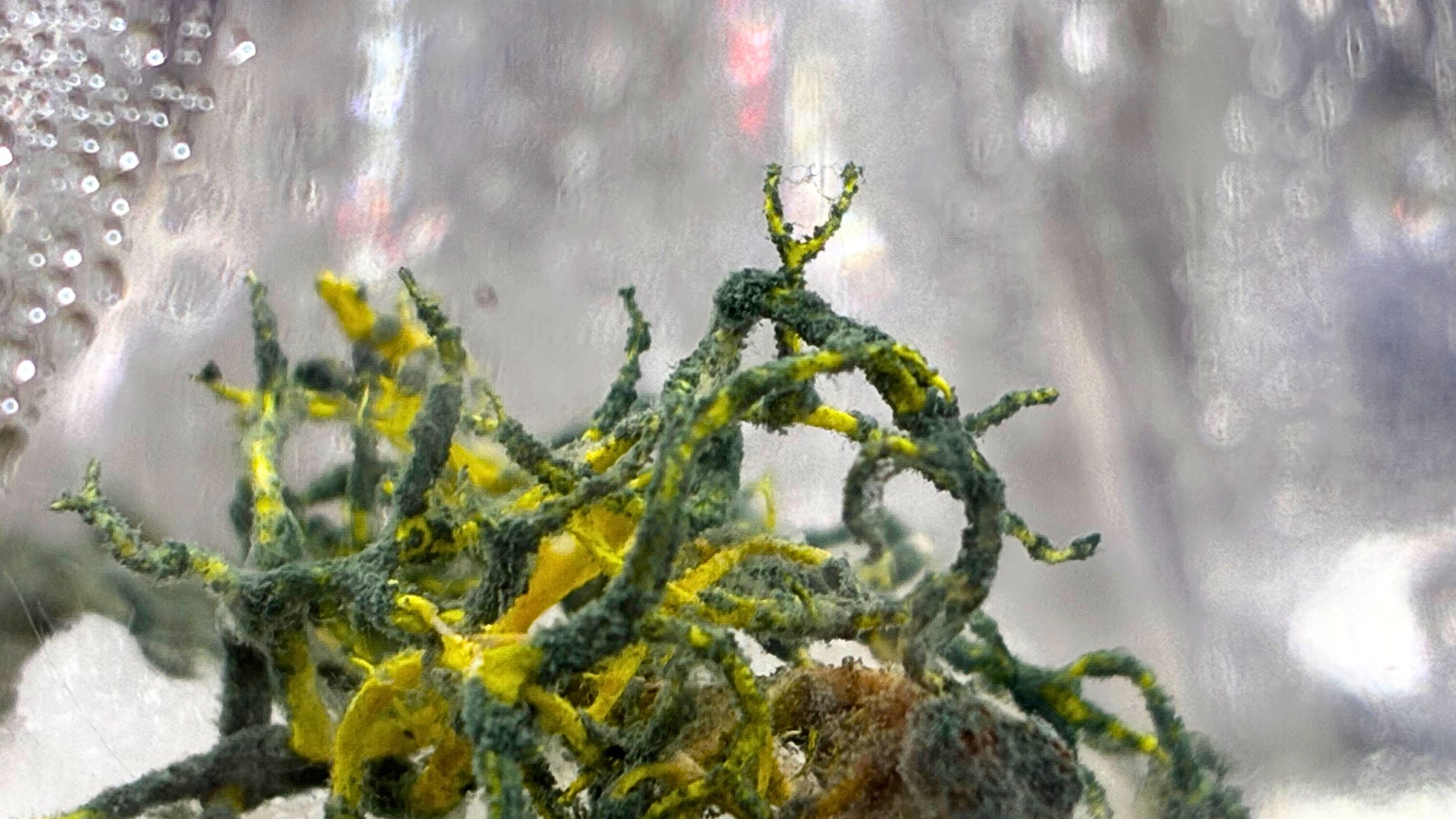
AstroBiota maintains an independent Conservation–Observation–Operation Program focused on some of the most difficult symbiotic systems known, including lichens and proto-lichen morphologies.
This program exists to culture, observe, and sustain long-lived symbiotic states that are rarely accessible to industry or laboratory work. These systems function as both conservation targets and experimental references — allowing us to study how highly wild partnerships stabilize, reorganize, and retain history over extended time horizons.
Proto-lichen systems are cultivated not as products, but as long-horizon symbiotic substrates: living systems that test the limits of domestication, memory, and behavioral stability. Insights from this work inform our broader process development while contributing to the preservation of fragile biological lineages.

Hi, I’m Hiram — a drug delivery and biotech engineer. I work on methods for conditioning wild biological systems into stable, repeatable forms, using some of the most resistant organisms available to understand what real domestication requires.