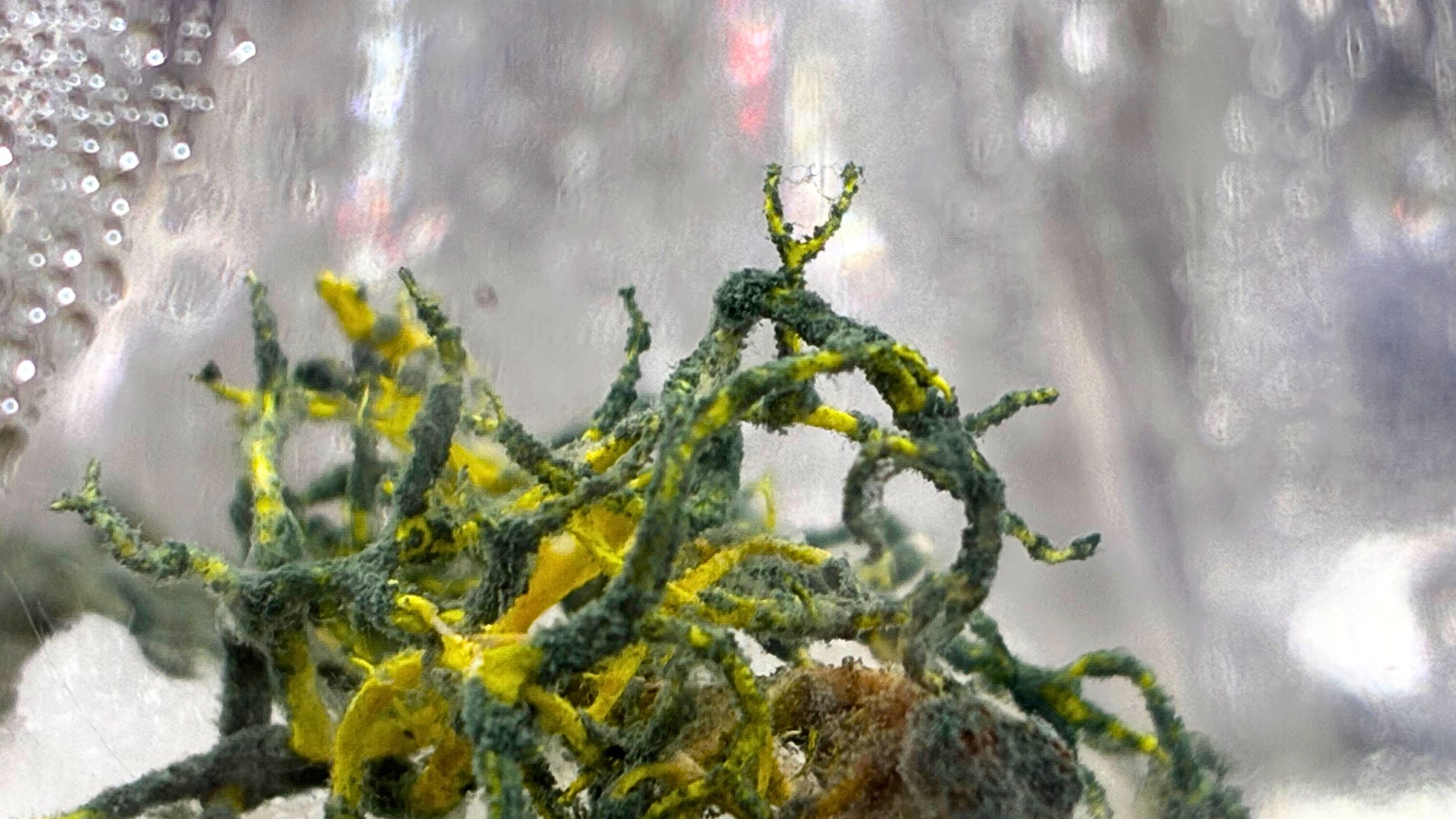
Wild symbiotic morphology

Purpose

AstroBiota studies what remains when systems carry their history.

Systems fail when memory disappears, recovery is ignored, or control is attempted without constraint.

Physical accountability via metabolic hysteresis

We explore biophysical systems that accumulate cost over time and recover only through slow physical processes.

  • Redox recovery as a measurable constraint signal
  • Hysteresis and fatigue as long-horizon memory
  • Accountability as a physical primitive

An archive of reference artifacts for intelligence

We build and preserve artifacts that ground claims about intelligence in physics, state, irreversibility, and limit.

  • Intelligence framed as state propagation under limits
  • Artifacts as reference models, not metaphors
  • Long-horizon observation as evidence

Regenerative production and conservation-first value

We develop biological systems designed for continuous operation, regeneration, and conservation-linked value.

  • Surface-area–scaled biological systems
  • Continuous harvest models
  • Economic forms compatible with long-term stability

An independent observatory

AstroBiota exists to examine failure modes that emerge when systems are optimized without memory, scaled without recovery, or controlled without constraint.

Rather than treating history and irreversibility as implementation details, AstroBiota treats them as primary design variables.

The work focuses on systems where consequence cannot be externalized or reset — biological, technical, and institutional alike.

The aim is not to prescribe solutions, but to establish reference conditions: points where memory, limits, and recovery are intrinsic to the system itself.

Memory · Constraint · Recovery

AstroBiota is research-led, artifact-driven, and intentionally upstream. Some outcomes may become products; others may remain purely foundational.